About
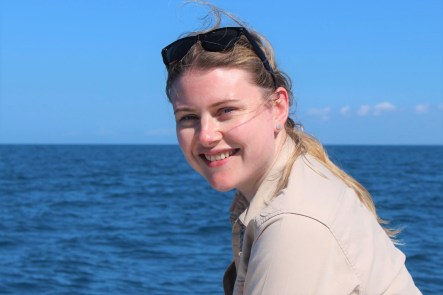
Awarded an MBE for services to Marine Conservation and Coastal Communities
in the King’s New Year Honours List 2025
Click here for Media Release and quote
Emily is a multi-award-winning expert at the forefront of driving positive change for our ocean, rivers and the communities that depend on them. She currently leads WWF’s Global River Dolphins Initiative, working across 14 countries in Asia and South America, and is based in the UK.
Emily, a marine biologist, is a Fellow of the Royal Geographical Society and an Honorary Associate Research Fellow at the University of Exeter. Her work and research have taken her all across our blue planet, from Antarctica to the Amazon, and she is currently coordinating research on marine and freshwater dolphins. She is writing her first book and shares her adventures on Marine Biology Life.
Emily is a state-schooled, first-generation graduate from a working class family and volunteers as a mentor, ambassador and sector role model for various youth and social mobility organisations.
Emily is a co-founder of the #Motion4theOcean – the world’s first Local Government Ocean Recovery Declaration – passed so far by 34 councils, together serving over 4 million people. Emily presented the Motion for the Ocean at the UNESCO Cities with the Ocean event at the UN Ocean Decade Conference 2024. She coordinates this growing movement – supporting Councillors from across the political spectrum – together with her co-founders, on a voluntary basis. She was instrumental in 4 Midlands Councils making Ocean Recovery Declarations, shifting the paradigm on where the responsibility for ocean care lies.
Emily is a passionate environmental and social advocate, as comfortable speaking to a school group as to a TV crew or a government Minister. She has appeared on national TV & radio, regularly appears on podcasts, and has written for various publications. Watch her speak at the International Marine Conservation Congress here and on a national Sky News interview here. She is committed to recognising when to use her voice and when to pass the mic.
Her mission is to make (ocean) conservation more accessible, more inclusive and more effective. Please get in touch if you want to open doors together.
~
Achievements
- Named on the ENDS Power List 2024 as one of the top 100 most impactful environmental professionals in the UK.
nn - Winner, UK Women of the Future Awards 2023 for her work in ocean conservation and her potential for global impact.
nn - Co-founded the Motion for the Ocean initiative, co-authoring the model #Motion4theOcean and supporting coastal and inland local authorities in the development of local Ocean Recovery Declarations (2021 – present)
nn
- Highly Commended – “Inspirational Person” category at the UK’s national Flood and Coast Excellence Awards, June 2022 for her work inspiring and facilitating nature-positive coastal policy and practice.n
nn
- 2021 Winner – Rising Star Awards – Charity and Not-for-Profit Category for her work for England’s coast and its communities.
- Recognised as one of “30 under 30” global environmental leaders in 2020 by the North American Association for Environment Education. Emily was selected for her work to enable a wider range of people to enjoy and take action to protect our coasts and seas.
nn - Led the LGA Coastal Special Interest Group, a group of 57 local authorities serving 60% of England’s coastline and 16 million people (2019-2022). Emily positioned the group as an influential and respected voice on coastal issues, co-founded the national OneCoast coalition and was joint Secretariat to the All-Party Parliamentary Group for Coastal Communities.
n - Developed a £5m programme to engage underserved coastal communities with marine conservation, the first of its kind in the UK (2016-2019). This pioneering scheme ran from 2020-2024, see it’s impact here.
~~ - Developed a major new project to engage local communities in the conservation of the Dee Estuary (2018-2021) Details here.
~ - Published new research on UK humpback whales with all data collected by the local coastal community. This research reported on the first ever photo-ID match of a UK humpback whale to their Arctic feeding grounds and suggests that British seas act as a migratory stopover/alternative destination for migrating humpback whales. Read the paper, published in Marine Biodiversity Records, here.
~ - Led an award-winning dive survey programme that contributed to the designation of Marine Conservation Zones in England (2015-16) as national Living Seas Officer for The Wildlife Trusts (working on behalf of all 46 local Wildlife Trusts). Read here or watch here.
 Emily Cunningham MBE